
The Evolution of UFC Apparel: What Changed and Why It Finally Clicked
The UFC’s apparel history is one of those situations where you can clearly see the evolution of thinking behind the business. Before Reebok, fighters had full control. Their shorts were packed with sponsors, messy from a visual standpoint, but extremely valuable to them individually. In a time where the UFC was looking to create legitimacy in the sports world, they needed structure in the fighter uniforms to more closely mirror that of larger more mainstream sports. Then Reebok came in and cleaned everything up, but in doing so, it flattened the identity of the sport. It looked more professional, but it didn’t feel like MMA anymore, and more importantly, it didn’t give fans or fighters much to connect to. It always came across like a deal that made sense on paper more than it did in practice. A deal that was company first and not fighter first.
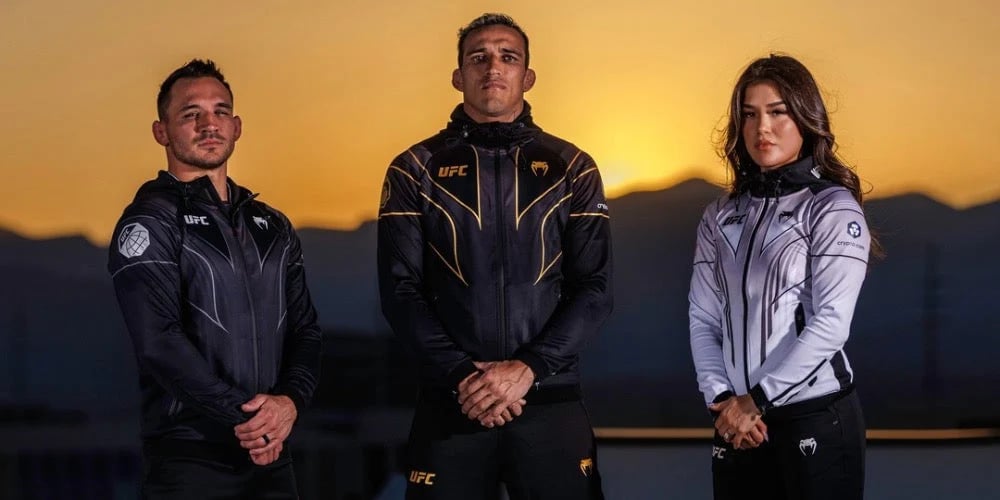
Venum works because it closes that gap. It’s not trying to adapt to MMA, it’s already part of it. That matters more than people think. When the athletes believe in the product and the brand already has credibility in gyms, everything downstream becomes easier. The kits look better, the fighters wear them with more ownership, and fans pick up on that immediately. It feels like a natural extension of the sport instead of a layer placed on top of it.
Where the Venum Era Is Already Delivering
The biggest improvement is still the simplest one. The product actually makes sense. The kits are built for MMA, they move well, they look sharp, and they feel like something you’d expect the best fighters in the world to wear. That baseline credibility is what allows everything else to work.
Where it starts to get interesting is how Venum has begun shifting these kits from uniform to product. The introduction of fighter-specific shorts and event-based designs is subtle, but it changes how fans view what they’re buying. This isn’t just standard gear anymore, it’s tied to a moment or a person.
I really noticed how well the Venum kits resonated with fans at UFC 273. People weren’t just browsing merch stands, they were committing to purchases, expensive purchases. You saw fans walking around in full kits, spending hundreds without hesitation. That’s not typical for something that’s supposed to function like a uniform. That’s what happens when the product carries identity and meaning. At that point, you’re not selling apparel, you’re selling connection. These kits were just generic, branded to Venum and the UFC, not to individual fighters and people loved them. Now in the era of custom fight kits and shorts for top fighters this connection goes a step further. However, Venum and the UFC can really take this connection to the next level by inviting fans into the process and creating a fan engagement around the creation of athlete uniforms in a way that has never been seen in the sports world.
Unlocking the Next Phase: Let Fans Into the Process
Right now, the system still runs in a pretty traditional way. The UFC and Venum design the kits, release them, and fans decide if they want to buy. It works, but it’s reactive. The next step is flipping that into something proactive where demand is built before the product ever hits the shelf.
The way I see it working is actually pretty straightforward, but powerful if executed right. For each major event, or even specific high-profile fights, the UFC and Venum open up a design window. Fans can submit their own fight kit concepts through a dedicated platform. That includes the visual design itself, but just as importantly, a short explanation of what the design represents. Why those colors, what elements tie into the fighter’s background, what story it’s trying to tell.
Once submissions close, you move into a selection phase. You don’t want thousands of designs going straight to a public vote, so there’s a curated shortlist, maybe the top 10 to 20 designs per fighter or per fight. That shortlist alone becomes content. You can have fighters reacting to them, analysts breaking them down, fans debating which ones actually represent the fighter best.
Then you open voting to the public. This is where it really starts to scale. Fans aren’t just picking a design, they’re campaigning for it. They’re sharing it, posting about it, trying to get other people to vote. At that point, they’re not just engaging with the product, they’re promoting the event, the fighter, and the brand at the same time.
The winning design gets produced as the official fight kit for a particular fighter for that event. Ideally, the designer is also highlighted as part of the story, which adds another layer of connection. When the fight happens, that kit already has built-in meaning because fans were part of choosing it. And immediately after the fight, it becomes available as a limited product tied directly to that moment.
You can take it even further by doing variations. Generally speaking the fans are creating the fight shorts themselves, but the design and pattern can be utilized throughout the entire fight kits as limited merch drops. Fans can buy UFC X Venum hats, shirts, socks, and of course the actual fight shorts to commemorate the fighter and the event.
From a business standpoint, what you’ve done is shift product development into a live, fan-driven process. You’re validating demand in real time, creating marketing before production, and turning what used to be a simple release into a full engagement cycle.
Big Picture 1: This Becomes an Endless Content and Data Engine
Once this system is in place, the content side almost runs itself. Instead of relying on the same promotional structure every fight cycle, you now have a rolling stream of fan-driven content that starts weeks before the event. Submissions, reactions, debates, voting updates, leaderboards, all of it creates a constant flow of material that feels organic because it is.
From a marketing perspective, that’s incredibly efficient. You’re not just pushing content out, you’re creating a reason for fans to participate and bring others in with them. That naturally lowers acquisition costs because the audience is doing a lot of the distribution work.
At the same time, you’re collecting valuable data without it feeling forced. You’re seeing what designs gain traction, what themes resonate, which fighters drive the most engagement, and how fans interpret different identities. That’s insight you can use across everything from product strategy to sponsorship deals.
On the sales side, this shortens the gap between interest and purchase. By the time a design wins, fans already feel connected to it. They’ve followed the process, maybe even voted on it, and in some cases promoted it. Buying the kit becomes a continuation of that involvement instead of a separate decision point.
Big Picture 2: It Deepens Fighter Brands in a Way That Actually Converts
MMA has always been driven by individual brands, but most of that branding is built through interviews, social media, and performance. What’s been missing is a scalable visual layer that consistently reinforces who a fighter is.
Fight kits are one of the few guaranteed pieces of real estate every fighter has in front of a global audience. If you turn that into something fans help shape, it changes how those brands are built. You’re no longer relying on a single narrative, you’re creating multiple interpretations of a fighter’s identity, which leads to more conversation and more visibility.
From a business standpoint, stronger brands translate directly into more opportunities. Fighters with engaged audiences are more valuable to sponsors, more marketable to the promotion, and ultimately have more leverage in their careers.
Where it really shows up is in purchasing behavior. When fans feel like they understand a fighter on a deeper level, and especially when they’ve had some level of input in how that fighter is represented, they’re far more likely to keep buying. Not just once, but repeatedly. Different fights, different designs, different moments. That’s how you turn a fan into a long-term customer.
Big Picture 3: Every Event Becomes a Product Launch With Long-Term Value
The last piece is how this reshapes the lifecycle of an event. Right now, most fight cards follow a predictable pattern. There’s buildup, the event happens, and then the focus shifts to what’s next. The commercial window is relatively short.
If you attach unique, fan-influenced kits to specific fights, you extend that window significantly. Each fight becomes its own product launch, with meaning that’s directly tied to the outcome. From a marketing standpoint, that adds another layer of anticipation because fans know what happens in the cage will define the story behind the product.
From a sales perspective, you get both immediacy and longevity. There’s the initial surge right after the fight, when emotions are high and fans want to own a piece of what just happened. But then there’s the long tail. When a fight becomes iconic, the kit associated with it becomes part of the sport’s history.
Imagine if Jorge Masvidal was wearing a customized pair of shorts at UFC 239 when he knocked out Ben Askren. Those shorts would be remembered in UFC history forever along with the moment. The pattern, design, and meaning of the kit would be beloved by fans of the sport for years creating not just a legendary moment but a legendary physical product line to go along with it.
That’s where the real value is. You’re not just selling something tied to an event, you’re creating a product that represents a moment. And moments in MMA, when they hit, don’t fade. They get replayed, talked about, and remembered for years. If the product is tied closely enough to that moment, it lives right alongside it.
The Opportunity Is Sitting Right There
The Venum deal already fixed the biggest issues from the Reebok era. The product makes sense, the brand fits the sport, and fans are clearly willing to spend on it. But the real opportunity isn’t just in making better gear, it’s in building a system around that gear that drives engagement, content, and long-term revenue.
Letting fans into the process connects all of those pieces. It turns product creation into marketing, marketing into community, and community into sales. At that point, fight kits stop being something fighters wear and start becoming something the entire ecosystem participates in.